
ORTHOPAEDICS • GUWAHATI
Knee Arthroscopy in Guwahati
What It Is, Who Needs It & What to Expect
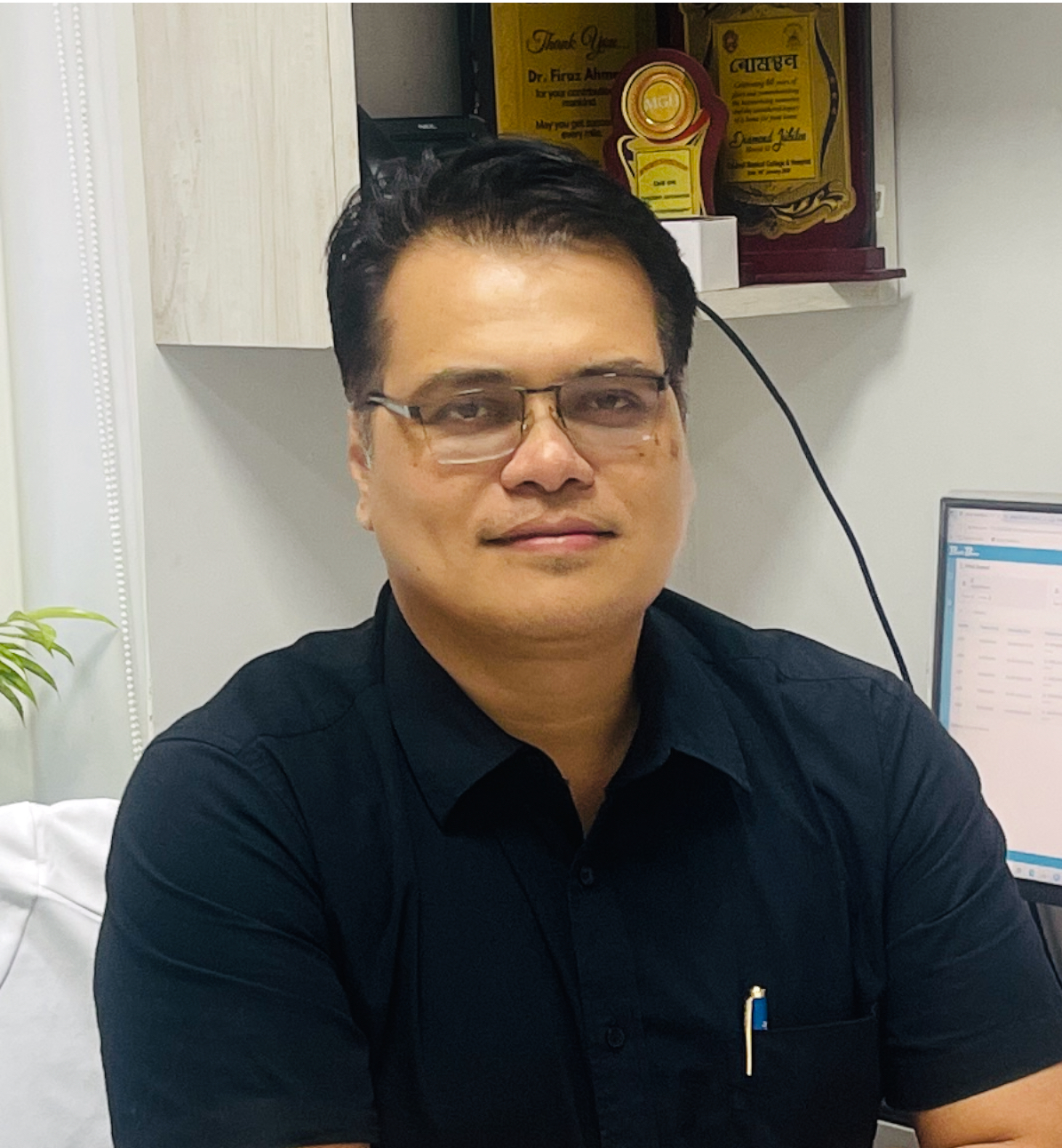
Dr. Firoz Ahmed, MS Orthopaedics
Updated: Apr 2026
Dr. Firoz Ahmed is one of the most experienced Arthroscopy surgeons in Guwahati, trusted by patients from Guwahati and across Assam and North East India.
- 15+ Years Experience
- Advanced Surgical Techniques
- High Patient Satisfaction
Knee pain that refuses to go away.
A knee that locks mid-step.
Swelling that keeps returning despite weeks of rest.
If this sounds familiar, a structural problem inside the joint — a torn meniscus, damaged cartilage, or a loose fragment — may be the cause.
Knee arthroscopy gives your orthopaedic surgeon a direct, real-time view inside the joint and the ability to treat many of these problems through tiny incisions, without major open surgery.
In this guide, Dr Firoz Ahmed, a leading arthroscopy surgeon in Guwahati, explains everything a patient needs to know — what knee arthroscopy involves, who is a candidate, what conditions it treats, what to expect during recovery, and how to choose the right surgeon.
Get Relief From Knee Issues
Consult with an Arthroscopy surgeon in Guwahati for accurate diagnosis and advanced treatment.
What is Knee Arthroscopy?
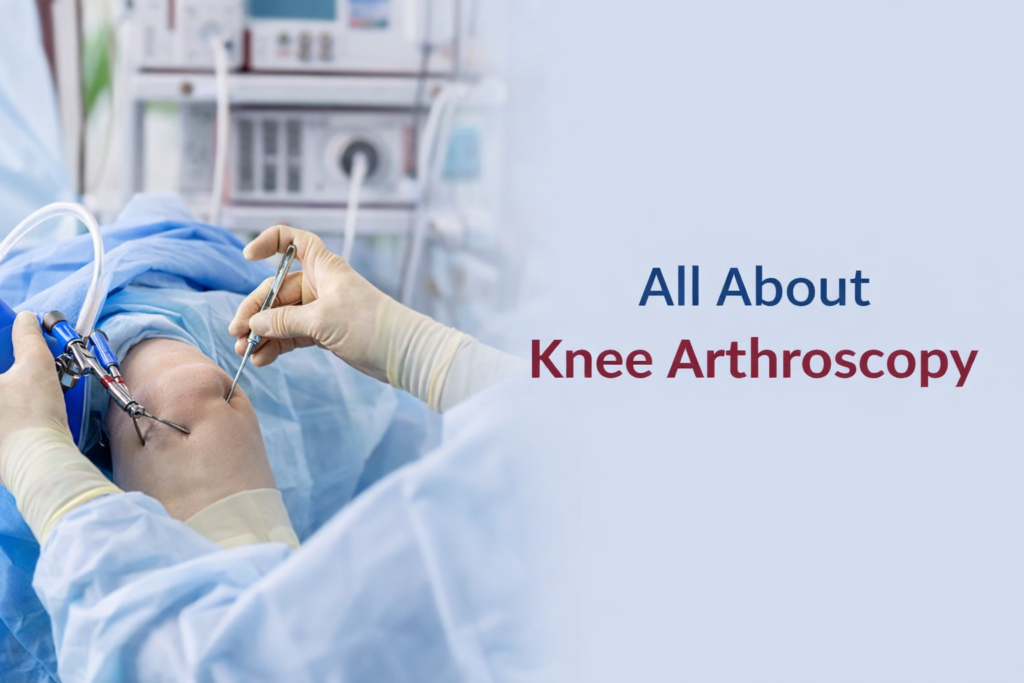
Knee Arthroscopy, also known as Keyhole Surgery, is a minimally invasive specialized surgical procedure where a long, thin camera-like instrument called an arthroscope (comparable to a pen refill in size) is introduced through a small puncture in the knee joint.
It transmits a live, magnified view of the inside of the joint onto a high-definition monitor, allowing precise visualization of internal structures.
The surgeon can also introduce similarly thin instruments through additional small openings to perform the required treatment with accuracy, without the need for large incisions.
Conditions Treated with Knee Arthroscopy
Knee arthroscopy is not a single procedure, but a technique that can be used to diagnose and treat a wide range of knee problems.
The most common conditions treated with arthroscopy include:
- Meniscus tears
- Ligament injuries such as ACL and PCL tears
- Cartilage damage
- Loose bodies inside the joint
- Synovitis (inflammation of the joint lining)
- Selected cases of early arthritis
Who Needs Knee Arthroscopy?
Knee arthroscopy is usually recommended when symptoms persist despite adequate non-surgical treatment.
You may be a candidate for knee arthroscopy if you have:
- Persistent knee pain not improving with medications or physiotherapy
- Locking, catching, or clicking sensations in the knee
- Recurrent swelling of the knee joint
- Sports injuries affecting knee stability or function
- MRI findings suggesting treatable internal damage
- Reduced ability to perform daily activities or sports
— Dr Firoz Ahmed
Benefits of Knee Arthroscopy
Knee arthroscopy offers several advantages over open surgery.
- Smaller incisions with minimal scarring
- Less pain after surgery
- Faster recovery and early return to activities
- Short hospital stay
- Lower risk of complications compared to open surgery
- Better visualization of joint structures for precise treatment
General Recovery Guidelines
- Apply ice packs and keep the leg elevated to reduce swelling
- Begin exercises as advised, early movement helps prevent stiffness
- Weight bearing should follow your surgeon’s advice
- Follow rehabilitation guidelines diligently for optimal recovery
- Avoid running, jumping, driving, or strenuous activities until your surgeon permits
Risks and Complications
Knee arthroscopy is one of the safest surgical procedures performed today. Serious complications are uncommon. Known risks include:
- Infection — rare, minimised with prophylactic antibiotics and sterile technique
- Deep vein thrombosis (DVT) — prevented with early mobilisation and compression stockings
- Nerve or vessel injury — extremely rare with an experienced arthroscopic surgeon
- Persistent swelling or stiffness — usually resolves with consistent physiotherapy
- Incomplete symptom relief — particularly in cases with underlying advanced arthritis
Your risk profile is discussed in detail during your pre-operative consultation.
Knee Arthroscopy vs Open Knee Surgery
| Feature | Arthroscopy (Keyhole) | Open Surgery |
|---|---|---|
| Incision size | 2–4 cuts < 1 cm each | One large incision |
| Hospital stay | Day care / 1 night | 2–5 days |
| Post-operative pain | Mild to moderate | Moderate to severe |
| Infection risk | Very low | Higher |
| Recovery time | Weeks | Months |
| Scarring | Minimal | Significant |
Why Patients Choose Dr. Firoz Ahmed for Knee Arthroscopy in Guwahati
Patients across Assam and Northeast India — from Dibrugarh, Jorhat, Tezpur, Silchar, and beyond — travel to Guwahati for arthroscopic knee surgery with Dr. Firoz Ahmed because of:
- Specialised training in arthroscopic and minimally invasive orthopaedic surgery
- Extensive experience with ligament reconstruction, meniscus repair, and cartilage procedures
- Personalised treatment plans
- Sports injury expertise
- Transparent patient communication, you understand every step of your treatment
- Outstation patient support, assistance with travel and accommodation coordination
— Dr Firoz Ahmed
Get Relief From Knee Issues
Consult with an Arthroscopy surgeon in Guwahati for accurate diagnosis and advanced treatment.
Explore related Knee conditions
Learn about ACL injuries, symptoms, and advanced treatment options.
Understand posterior ligament injuries and their management.
Explore causes, symptoms, and treatment of meniscus injuries.
Learn where we can avoid or delay surgery with biological treatment options.
FAQs
The procedure is performed under anaesthesia. You will feel nothing during surgery. Post-operative pain is typically mild and well managed with oral medication. Most patients are pleasantly surprised by how comfortable the recovery is.
The surgery can take anywhere between 30 minute to 2 hours depending on the condition being treated.
Yes. Exercises forms an important part of the treatment process after knee arthroscopy and restores mobility, stability and strength.
Knee arthroscopy has a limited role in knee arthritis. It cannot reverse the underlying process and is not recommended in most cases. Advanced cases rather may need Knee Replacement.
After minor procedures, driven can be after 1-2 weeks, but after ACL reconstruction, it may take longer (6-8 weeks).
Dr Firoz Ahmed
Orthopaedic Surgeon – Hip & Knee Replacement
OPD: Mon–Sat | 9 AM – 4 PM
Location: ARHI Hospital, Jorabat (near Guwahati, Khanapara)
Medical review by Dr Firoz Ahmed, MBBS, MS (Orthopaedics) – Consultant Orthopaedic Surgeon, Guwahati.
Last Updated: Apr 2026
References:
- American Academy of Orthopaedic Surgeons (AAOS)
- IAS
- Cleveland Clinic
Medical Disclaimer:
Want to learn more about Arthroscopy?
Contact us now!